If you’ve started pricing a deck, you’ve probably found numbers all over the map, and most of them come with no explanation. Here’s how we walk homeowners through a deck budget: what actually drives the price, where quotes quietly diverge, and how to compare bids without getting burned.
Size sets the floor, not the total
Square footage is the first thing everyone asks about, and it matters. More deck means more framing, more decking, more labor. But two decks of identical size can differ by thousands of dollars. Height off the ground, railing, stairs, and material choice move the number far more than most people expect. A low platform deck a step off the grass is a fundamentally different project than a second-story deck that needs engineered posts and a long stair run.
Pressure-treated, cedar, or composite
Pressure-treated pine is the workhorse: the most affordable option and plenty strong, but in Alabama sun and humidity it wants cleaning and re-sealing every couple of years to look its best. Cedar costs more up front, naturally resists rot and insects, and ages into a color a lot of people love. Composite carries the highest upfront price (boards, hidden fasteners, and matching railing all add up) but asks almost nothing of you afterward beyond an occasional wash.
None of these is the “right” answer. The right answer is the one that fits how much maintenance you’ll honestly do and how long you plan to stay in the house.
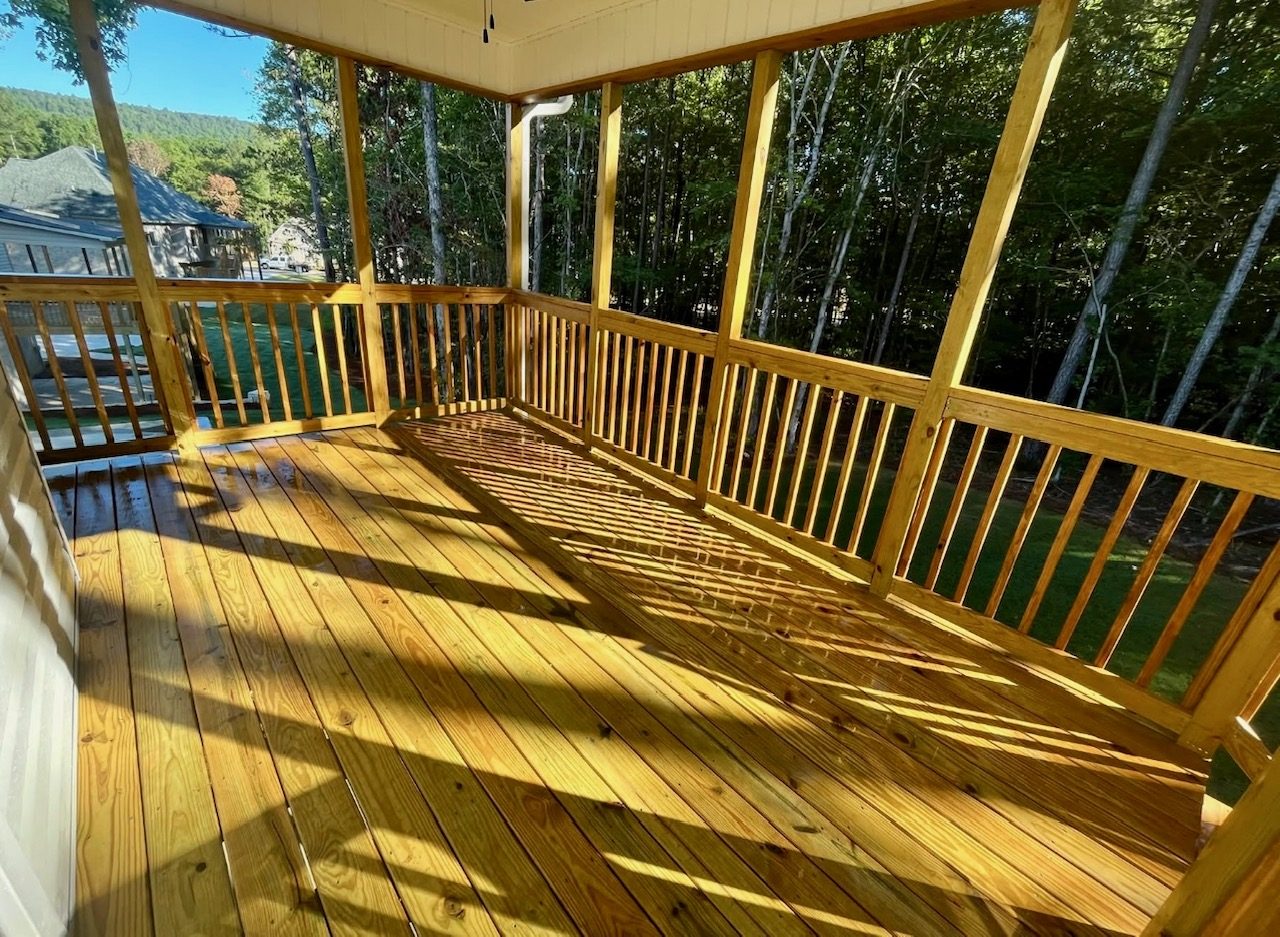
A CB Built Homes project
The line items nobody itemizes
This is where cheap-sounding quotes go to die. Ask any bidder whether their number includes: footings and structural posts (taller decks need more of both), stairs and landings, railing (often a quarter of the whole budget on its own), demo and haul-off of the old deck, permits where your city requires them, and proper ledger flashing where the deck meets the house. That last one is a few dollars of metal that prevents the single most common cause of deck failure, and it’s the first thing a rushed crew skips.
Broad ranges to anchor your budget
As a rough sketch (not a quote), here’s how projects tend to group. A modest ground-level pressure-treated platform often lands somewhere in the low-to-mid four figures. A mid-size pressure-treated deck with railing and stairs commonly runs from the upper four figures into the low five figures. Move to cedar or entry-level composite at similar sizes and you’re generally in low-to-mid five-figure territory. Large composite decks with built-in seating, lighting, or multiple levels go up from there.
Treat every number above as illustrative only. Pricing varies with your specific site, the season, lumber markets, access to your yard, and a dozen smaller factors. The only figure that matters is a written, itemized quote for your actual project.
How to keep a deck budget honest
Ask every bidder for an itemized quote: framing, decking, railing, stairs, demo, and permits as separate lines. Ask what’s excluded. Ask how changes are priced if you decide mid-build that you want a bench or a wider stair. A contractor who answers those three questions cheerfully is telling you something about how the whole project will go. We put all of it in writing by default, because we’d want the same if we were hiring.
Thinking about a deck? We’ll come measure, talk through materials for how you actually live, and leave you a written, itemized quote, free, and with zero pressure attached.
Not sure who to hire? Read our 9-point hiring checklist.